
Greeks in Egypt, known as Egyptiots, trace an almost unbroken presence stretching over 2,600 years, from the trading post at Naukratis through the Macedonian-Greek Ptolemaic dynasty that ruled Alexandria to a small but active modern community. Their numbers once reached an estimated 200,000 to 300,000 people in the early 20th century. Today roughly 7,000 remain, holding onto churches, schools, and a cultural memory far larger than their present size.
TL;DR:
Greek influence in Egypt persisted through centuries of trade, settlement, and cultural exchange, with Naukratis serving as a key early hub for Greek-Egyptian relations.
The Ptolemaic dynasty created a hybrid culture in Alexandria, blending Greek and Egyptian traditions while maintaining distinct political and religious institutions.
The Greek community flourished during the 19th and early 20th centuries, controlling significant economic sectors before sharply declining after the Egyptian revolution of 1952.
Legal privileges and economic dominance made Greeks vulnerable to nationalist policies, leading to a 95 percent population decline, from hundreds of thousands to about 7,000 today.
Ongoing heritage preservation efforts and research efforts like Hellenism Watch aim to document and maintain the community’s historical footprint amidst continued demographic contraction.
Table of Contents
-
The Ancient Roots: Naukratis and Early Greek Contact with Egypt
-
Alexander, the Ptolemies, and the Birth of Hellenistic Alexandria
-
Greek Language and Community Life Under Roman and Byzantine Rule
-
The Golden Age: Greek Life in 19th and 20th Century Alexandria and Cairo
The Ancient Roots: Naukratis and Early Greek Contact with Egypt
Long before any Macedonian king set foot on Egyptian soil, Greek traders and soldiers were already doing business along the Nile. The town of Naukratis, founded in the western Nile Delta during the 7th century BCE, gave Greek merchants a legal foothold to trade directly with Egyptians under pharaonic oversight. It functioned as what historians call an emporion, a licensed trading settlement rather than a colony in the later sense, and it became the primary channel through which Greek city states exchanged goods, ideas, and religious practices with Egypt.
Naukratis was not a one-way pipeline for grain and papyrus. Greek mercenaries served in Egyptian armies as early as the reign of Psamtik I in the 7th century BCE, and their graffiti survives at Abu Simbel, scratched into a temple wall by soldiers who had marched deep into Nubia on campaign. That kind of physical, dateable evidence tells historians more than any later literary account ever could, because it was left by the people who were actually there, not written centuries afterward by someone reconstructing events secondhand.
The archaeological record from Naukratis backs up its reputation as a genuine meeting point of cultures, not just a supply depot:
-
Distinctive East Greek pottery styles, especially from Chios and Rhodes, turn up in quantities that indicate long-term settlement rather than occasional trade calls.
-
Sanctuaries dedicated to Greek deities, including Apollo, Hera, and Aphrodite, stood alongside Egyptian religious structures.
-
Ritual objects suggest a blending of Greek and Egyptian religious practice, including associations between the Greek goddess Demeter and the Egyptian goddess Isis.
-
Inscribed dedications name specific Greek city states as sponsors of religious buildings, pointing to organized civic involvement rather than individual merchant ventures.
Population snapshot: No census exists for archaic Naukratis, but the density of imported Greek pottery at the site, combined with the number of distinct sanctuaries, suggests a resident Greek population large enough to sustain full civic and religious institutions, not just a seasonal trading camp.
What makes Naukratis significant for understanding the entire arc of Greek history in Egypt is that it established a pattern that would repeat for the next two millennia: Greeks arriving as specialists, whether soldiers, traders, or later administrators, and negotiating a distinct legal and cultural space within an existing Egyptian framework rather than displacing it outright.
Alexander, the Ptolemies, and the Birth of Hellenistic Alexandria
Everything changed in 332 BCE, when Alexander the Great took Egypt from Persian control with barely a fight and founded a city that would outlast his own empire. Alexandria was laid out on a grid plan at the edge of the Nile Delta, positioned deliberately to face the Mediterranean rather than the Nile Valley, a choice that signaled where its founder’s ambitions actually lay. Alexander never lived to see the city grow. That task fell to his general Ptolemy, who took control of Egypt after Alexander’s death and founded the dynasty that would rule for nearly three centuries.
Ptolemaic Egypt, spanning 323 to 30 BCE, was a genuinely unusual political arrangement. A Greek-Macedonian royal family sat atop a country of millions of Egyptians, and rather than attempting to erase Egyptian culture, the Ptolemies ran something closer to two parallel systems operating side by side. Greek became the official language of administration, courts, and commerce among the ruling class, while the vast majority of the population continued speaking Egyptian and interacting with traditional temple structures. Bilingual documents from the period, including the eventual Rosetta Stone, show just how deliberately the Ptolemies maintained both tracks at once.
Greek settlement patterns during this period followed distinct channels. Soldiers who served the Ptolemaic army received land grants known as cleruchies, particularly concentrated in the Fayum region southwest of Cairo, where entire villages of Greek settlers farmed land they had earned through military service. These communities left behind papyri, contracts, and personal letters that give historians an unusually intimate look at daily life, from marriage disputes to tax complaints, written in everyday Greek rather than formal royal inscriptions.
Alexandria itself became something the ancient world had rarely seen: a purpose-built Hellenistic capital designed to project Greek culture and royal power simultaneously. The city’s institutions reflect that ambition directly:
-
The gymnasium system, which structured elite Greek social and educational life and doubled as a marker of citizenship status distinct from the Egyptian population.
-
The Great Library of Alexandria, which drew scholars from across the Mediterranean and aimed to collect the sum of Greek written knowledge in one place.
-
The Pharos lighthouse, an engineering feat that became one of the ancient world’s most recognized structures and a practical necessity for a harbor city built on a featureless coastline.
-
The cult of Serapis, a deliberately constructed hybrid deity combining Greek and Egyptian religious elements, designed to give both populations a shared object of worship.
That last point matters more than it might seem. The Ptolemies practiced what scholars call interpretatio graeca, mapping Egyptian gods onto Greek equivalents (Amun became linked with Zeus, Thoth with Hermes) as a form of religious diplomacy that let both communities recognize something familiar in the other’s temples.
Ptolemaic rule produced one of history’s more deliberate experiments in cultural fusion: a Greek royal court presiding over Egyptian religious and administrative traditions, syncretizing art, architecture, and worship rather than replacing them outright. The result was neither fully Greek nor fully Egyptian but something new to the Mediterranean world.
The dynasty’s final and most famous ruler, Cleopatra VII, is often assumed to have been ethnically Egyptian given how thoroughly her reign is remembered as part of Egyptian history. She was not. Cleopatra descended from the Macedonian-Greek Ptolemaic line, tracing her ancestry back to Ptolemy I, one of Alexander’s own generals. She was, notably, also the first Ptolemaic ruler in nearly three centuries to bother learning the Egyptian language, a detail that says something about how culturally separate the ruling dynasty had remained from the population it governed for most of its history.
Greek Language and Community Life Under Roman and Byzantine Rule
Rome absorbed Egypt in 30 BCE after Cleopatra’s death, but Greek did not disappear from Egyptian administration. It actually held on as the primary language of government, commerce, and elite culture for centuries under Roman rule, even as Latin dominated in other provinces. Egypt’s unique status as something close to the emperor’s personal estate meant Rome largely kept the administrative machinery the Ptolemies had built, Greek-speaking bureaucracy included.
Bilingualism defined daily life for much of the population living near Greek-founded cities like Alexandria, Naukratis, and the Fayum settlements. Papyrus documents from this era, preserved by Egypt’s dry climate in quantities unmatched anywhere else in the ancient Mediterranean, show ordinary people writing wills, tax receipts, and personal letters in Greek even when their names and family backgrounds were clearly Egyptian.
A distinct Egyptian Greek dialect emerged from this centuries-long contact, absorbing Egyptian vocabulary and phrasing patterns into everyday Greek usage. That linguistic blending didn’t happen in isolation. It ran alongside:
-
Continued temple worship of Egyptian deities alongside Greek gods, often within the same sacred precincts.
-
The gradual rise of Christianity in Egypt from the 1st century CE onward, which spread first through Greek-speaking urban populations before reaching the broader countryside.
-
The development of Coptic Christianity, whose alphabet borrowed heavily from Greek letters, a direct linguistic legacy of centuries of Greek administrative dominance.
-
Alexandria’s emergence as one of early Christianity’s most important intellectual centers, producing theologians whose Greek-language writings shaped doctrine for the entire Mediterranean world.
By the Byzantine period, Alexandria remained a major Greek cultural and religious center even as its political importance relative to Constantinople declined. The city’s Patriarchate, established in the earliest centuries of Christianity, continued operating as a Greek-speaking religious authority, a role it retains in name to this day. What’s notable across this entire span, from Roman annexation through the Byzantine centuries, is that Greek identity in Egypt survived not through political dominance but through language, religious institutions, and urban concentration in cities the Ptolemies had originally built for exactly that purpose.
How Greek Communities Fared Under Islamic and Ottoman Rule
The Arab conquest of Egypt in 641 CE ended over 900 years of Greek-influenced governance, and the shift was significant. Greek stopped being the language of state administration, replaced gradually by Arabic, and the political structures that had privileged Greek speakers for centuries disappeared almost overnight. That did not mean Greek presence in Egypt vanished. It meant Greeks in Egypt shifted from being administrators of the state to being one merchant and religious community among several operating within a new Islamic legal framework.
Trade connections proved more durable than political ones. Mediterranean commercial networks that Greek merchants had built over centuries continued operating under new rulers, particularly in port cities where Byzantine, and later Ottoman, trading relationships kept Greek merchant communities economically relevant even without political power. Alexandria’s importance as a Mediterranean port meant it never fully lost its Greek commercial presence, even during periods of reduced Byzantine and later Greek political influence.
Several institutional threads survived this long stretch of changing rulers:
-
Coptic and Greek Orthodox churches persisted as legally recognized religious communities under Islamic rule, subject to specific taxes and restrictions but not eliminated.
-
Monasteries with Greek connections, including sites tied to the broader Eastern Orthodox tradition, maintained continuous religious practice.
-
Port city merchant communities in Alexandria and, later, Rosetta preserved commercial and family networks across generations.
-
The Ottoman conquest of Egypt in 1517 brought a new imperial framework that, in practice, allowed Greek Orthodox subjects a degree of religious autonomy under the millet system used across Ottoman territories.
The Ottoman period gradually opened space for renewed Greek migration into Egypt, particularly from the 18th century onward, as merchants from Greek islands and the mainland sought commercial opportunities under relatively stable Ottoman administration. That slow trickle of arrivals set the stage for the far larger wave of Greek migration that would follow in the 19th century, once Egypt’s economy began attracting foreign capital and labor on a much bigger scale.
The Golden Age: Greek Life in 19th and 20th Century Alexandria and Cairo
The modern Greek community in Egypt reached its peak roughly between 1880 and 1940, a period when Alexandria in particular functioned as one of the Mediterranean’s genuinely cosmopolitan cities, with Greek merchants, bankers, and professionals occupying an outsized role in its economy. Muhammad Ali’s economic reforms in the early 19th century opened Egypt to foreign investment and labor, and Greek immigrants arrived in growing numbers to fill roles in trade, finance, and the booming cotton export industry that made Egypt an agricultural powerhouse.
Greek involvement in Egypt’s economy went well beyond small shopkeeping. Greek merchant families built substantial banking houses and trading firms, dominated segments of the cotton and tobacco trade, and played a significant role in Mediterranean shipping networks connecting Alexandria to European ports. Greek professionals worked as doctors, lawyers, and engineers throughout Cairo and Alexandria, and the community built out institutions that mirrored a fully functioning parallel society.
| Institution type | Examples in Egypt | Primary cities |
|---|---|---|
| Religious authority | Greek Orthodox Patriarchate of Alexandria | Alexandria |
| Education | Greek community schools | Alexandria, Cairo, Port Said |
| Healthcare | Greek community hospitals | Alexandria, Cairo |
| Commerce | Greek-owned trading houses, banks | Alexandria, Cairo |
| Culture | Greek clubs, theaters, newspapers | Alexandria, Cairo |
Population at its height: Historical estimates place the Greek population in Egypt at somewhere between 200,000 and 300,000 during the early to mid-20th century, concentrated overwhelmingly in Alexandria, with smaller but significant communities in Cairo and the port city of Port Said.
That scale of presence encouraged a self-image among Egypt’s Greeks as indispensable modernizers of the Egyptian economy, a narrative that shows up repeatedly in community histories and memoirs from the period. Historian Alexander Kitroeff has pushed back on that framing, arguing that while Greeks genuinely occupied privileged economic positions, the community’s role as the primary agent of Egyptian modernity has often been overstated in its own retrospective accounts. Greek prosperity depended heavily on Egyptian labor, Egyptian land, and a colonial-era legal framework, the Capitulations system, that granted foreign nationals special legal protections. That framework, not Greek enterprise alone, made the community’s outsized economic role possible.
That nuance matters for anyone trying to understand what actually happened next, because the very legal privileges that had made the Greek community’s prosperity possible were also what made it politically vulnerable once Egyptian nationalism gained real momentum in the mid-20th century.
Why the Greek Community in Egypt Collapsed After 1952
The Egyptian revolution of 1952, which brought Gamal Abdel Nasser to power, marked the beginning of the end for large-scale Greek presence in Egypt. Nasser’s government pursued a nationalist economic program that included nationalizing foreign-owned businesses, banks, and land holdings, policies that hit the Greek community especially hard given how concentrated its wealth was in exactly those sectors. The Capitulations system that had protected foreign nationals’ legal and economic privileges was formally abolished, stripping away the framework Greek businesses had relied on for generations.
The Suez Crisis of 1956 accelerated the exodus considerably, as tensions between Egypt and Western-aligned powers made the position of foreign nationals, including many Greeks who held foreign citizenship despite generations of Egyptian residence, increasingly precarious. Families who had lived in Alexandria for three or four generations found themselves recalculating whether Egypt still had a future for them.
Emigration followed several clear patterns depending on family circumstances and existing connections:
-
Greece itself absorbed the largest share of returning Egyptiots, particularly families with strong ties to specific Greek islands or regions.
-
Australia became a major destination, building on existing Greek immigrant networks already established there from earlier waves of migration.
-
The United States and Canada attracted Greek Egyptians with professional skills and existing diaspora connections in North American cities.
-
South Africa drew a smaller but notable number of Greek Egyptian families, particularly those with commercial ties to other parts of the British Commonwealth.
The scale of the decline: From a peak estimated at 200,000 to 300,000, the Greek population in Egypt fell to roughly 7,000 people in recent estimates, a contraction of over 95% within a single generation.
Those who stayed often did so for reasons that had little to do with nationalist sentiment about Hellenism. Some research on Greek Egyptians who remained past the main exodus period suggests belonging was frequently measured through pragmatic markers like property ownership, existing employment, and legal residency status rather than abstract identity commitments, a detail that complicates any tidy story about why some families left while others didn’t.
What Remains: Greek Institutions and Culture in Egypt Today
Egypt’s contemporary Greek community is small, but it is not symbolic. It runs actual institutions, holds actual services, and maintains a physical footprint across Alexandria and Cairo that predates most of the buildings around it. The Greek Orthodox Patriarchate of Alexandria remains the community’s central religious authority, tracing its establishment back to antiquity and continuing to hold ecclesiastical significance across the wider Eastern Orthodox world, not just within Egypt.
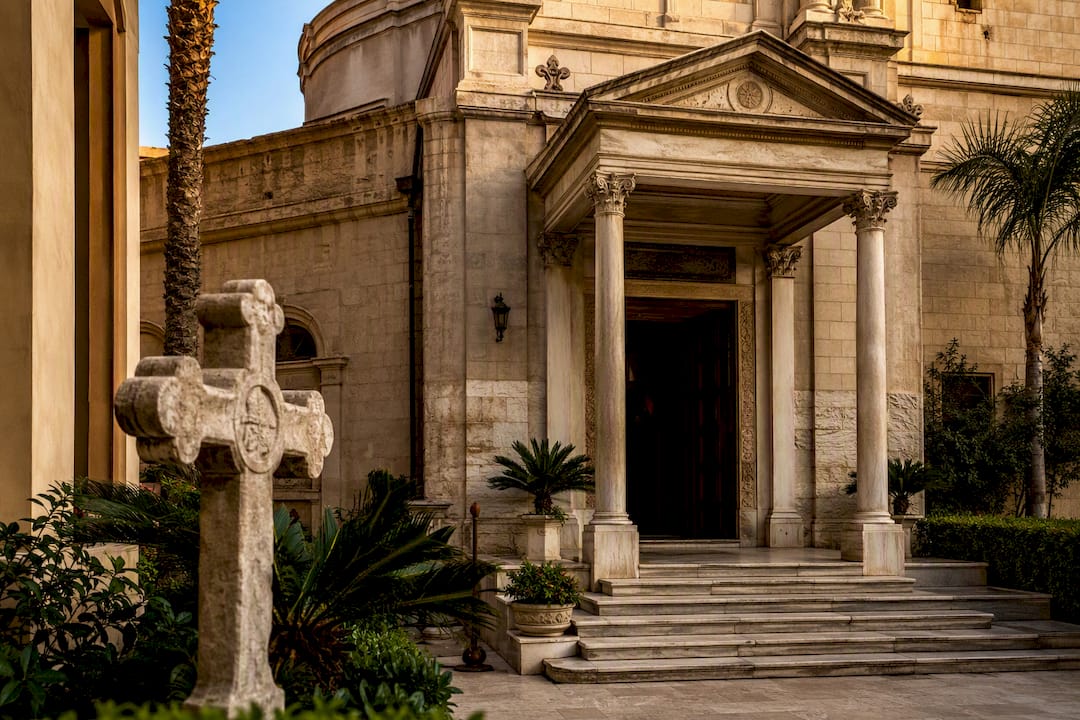
Cairo hosts two churches with particular historical weight: Saint Nicholas Church, serving the city’s remaining Greek Orthodox congregation, and Saint George Church in Old Cairo, situated in one of the oldest Christian quarters in the country and drawing visitors interested in the layered religious history of that specific neighborhood. Alexandria retains its own churches and community buildings, though many now serve smaller congregations than the structures were originally built to hold.
Several institutional threads have persisted or been actively revived:
-
A small number of Greek-language schools continue operating, serving both remaining community families and Egyptians interested in Greek language education.
-
Greek community clubs and cultural associations in Alexandria maintain social gathering spaces and organize cultural events tied to Greek holidays and traditions.
-
Restoration projects, including efforts connected to the Onassis Foundation], have funded preservation work on historically significant Greek buildings in Alexandria.
-
Greek government cultural diplomacy initiatives have periodically supported heritage preservation tied to the diaspora’s historical footprint.
Pro Tip: If you’re researching family history tied to Egypt’s Greek community, start with the Patriarchate of Alexandria’s archives before assuming records were lost. Many parish registers from the early 20th century survived the exodus and remain accessible to genealogy researchers who contact the relevant church administration directly.
The preservation work happening now says something important: interest in this community’s legacy is not purely nostalgic. Diplomatic and academic attention to Alexandria’s Greek heritage sites reflects a recognition that this history matters to how both Greece and Egypt understand their shared Mediterranean past.
How Hellenism Watch Approaches Diaspora Research Like This
Understanding a community that shrank from hundreds of thousands to a few thousand within a single generation requires more than a historical timeline. It requires ongoing attention to how the people who remain, and the millions who descend from those who left, continue to relate to Hellenism as an identity rather than a historical fact. That is the specific gap Hellenismwatch exists to address.
An independent, non-profit initiative exists to monitor the condition, risks, and opportunities facing Greek diaspora communities across the Balkans and Eastern Mediterranean. It maintains independence from government or party influence, aiming to back published claims with credible sourcing rather than assumption or nostalgia.
Contemporary research into diaspora identity, including the pattern noted earlier of Greek Egyptians who stayed for pragmatic rather than nationalist reasons, points to a broader truth: Hellenism outside Greece is shaped as much by practical circumstance as by cultural sentiment. That’s precisely the kind of nuance a systematic monitoring effort can capture that a single historical account cannot.
| What you get from Hellenism Watch | Why it matters for diaspora research |
|---|---|
| Independent, sourced analysis | No governmental or party filter on findings |
| Global scholarly network | Contributions from specialists across regions |
| Free public access | No paywall between research and diaspora communities |
| Open fellowship model | Academics can contribute area-specific expertise |
Academics, students, and diaspora members with relevant expertise can engage directly with the Observatory’s fellowship structure, contributing regional knowledge or data that strengthens the overall picture of contemporary Hellenism. The invitation runs both ways: readers get free access to evidence-backed research, and researchers get a platform that treats their specialized knowledge as part of a larger, coordinated effort rather than an isolated paper nobody outside their field will read.
Where to See Greek-Egyptian Heritage Today
-
Alexandria’s archaeological sites. The Greco-Roman Museum area and surviving fragments of the ancient city’s Greek quarter give visitors physical context for Ptolemaic-era urban planning, even though much of ancient Alexandria now sits underwater or beneath the modern city.
-
The Greek Orthodox Patriarchate of Alexandria. As the community’s central religious institution, its grounds and associated churches remain active sites of worship and history.
-
Saint George Church, Old Cairo. Located within Old Cairo’s historic Christian quarter, this church offers direct access to one of Egypt’s oldest continuously used religious sites tied to Greek Orthodox tradition.
-
The Naukratis excavation site. Located in the western Nile Delta, ongoing and historical excavations have produced pottery, sanctuary remains, and inscriptions now housed primarily in the British Museum and the Egyptian Museum in Cairo.
-
The Metropolitan Museum of Art’s Egyptian and Ptolemaic collections. For readers unable to travel, the Met’s essays and collection holdings on Ptolemaic-era Egypt provide detailed, image-rich documentation of the period’s art and material culture.
-
Regional Greek community archives in Alexandria and Cairo. These hold parish records, school documents, and photographs that researchers and genealogists can access directly through community administrators.
A Final Word on Why This History Still Matters
What strikes me most about this history is not the scale of what was lost after 1952, though that scale is genuinely staggering. It’s how much continuity survived anyway, in language traces, in church registries, in the pragmatic decisions of families who stayed. That continuity is exactly what systematic monitoring is built to track, not just the dramatic ruptures but the quieter persistence between them.
Egypt’s Greek community shows what happens when a diaspora’s fate depends on political conditions outside its control. That is precisely why an independent, evidence-based observatory matters for Hellenism today, not just in Egypt but everywhere Greek communities exist under shifting political ground. History like this only stays useful if someone keeps watching how it continues to unfold.
— Alexios
Go Deeper With Hellenism Watch’s Diaspora Research
Egypt’s Greek community is one thread in a much larger fabric of Hellenism stretched across the Balkans and Eastern Mediterranean, and most of it goes unmonitored by any single, independent source. Hellenismwatch exists specifically to fill that gap: free research, sourced claims, and zero government or party filtering on what gets published.
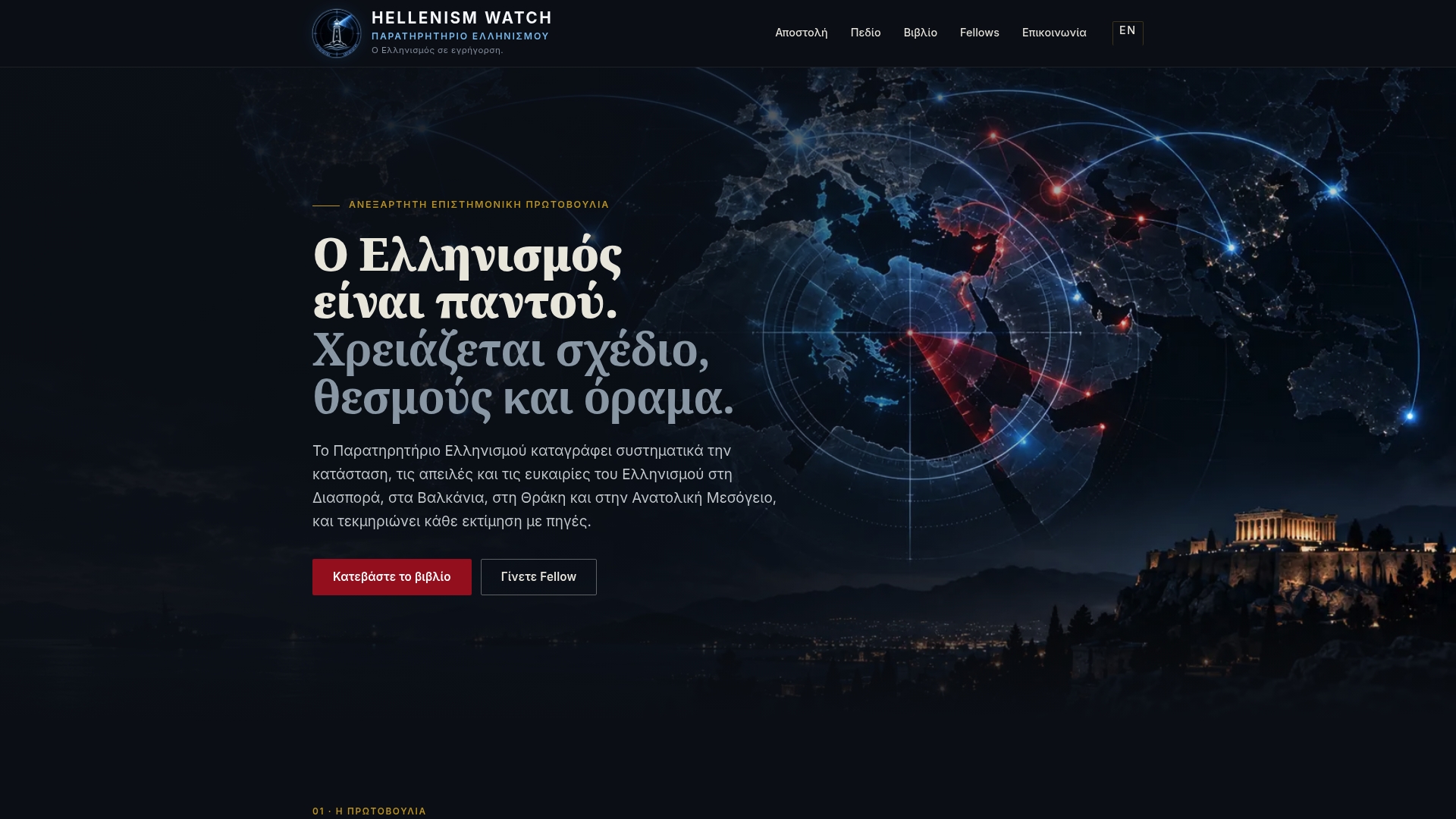
Publications and evidence-backed assessments on the site are made available at no cost to researchers and interested readers. The initiative offers a fellowship structure inviting scholars to contribute area expertise. If Egypt’s Greek history left you wanting a clearer picture of how Hellenism is faring elsewhere right now, visit the Hellenism Watch English page to browse current research and find out how to contribute your own knowledge to the network.
Sources
For readers who want primary and academic sources beyond this overview, a few starting points stand out:
-
Mediterranean Encounters | Egypt and the Classical World (Getty Publications)
-
Egypt in the Ptolemaic period - The Metropolitan Museum of Art
FAQ
Did the Greeks colonize Egypt?
Greeks established trading posts like Naukratis and later ruled Egypt politically under the Ptolemaic dynasty (323 to 30 BCE), but they governed alongside existing Egyptian religious and administrative structures rather than replacing Egyptian culture outright.
Was Cleopatra ethnically Greek?
Yes. Cleopatra VII descended from the Macedonian-Greek Ptolemaic dynasty, founded by Ptolemy I, one of Alexander the Great’s generals, rather than from an indigenous Egyptian royal line.
Why were there Greeks in Egypt?
Greeks first arrived as traders and mercenaries starting in the 7th century BCE, settled in larger numbers under Ptolemaic rule after Alexander’s conquest, and returned in far greater numbers during the 19th and early 20th centuries seeking economic opportunity in trade, banking, and agriculture.
What are Greek Egyptians called?
The ethnic Greek community historically settled in Egypt is commonly called Egyptiots (Αιγυπτιώτες in Greek), a term still used today to describe both those who remained and their diaspora descendants worldwide.